
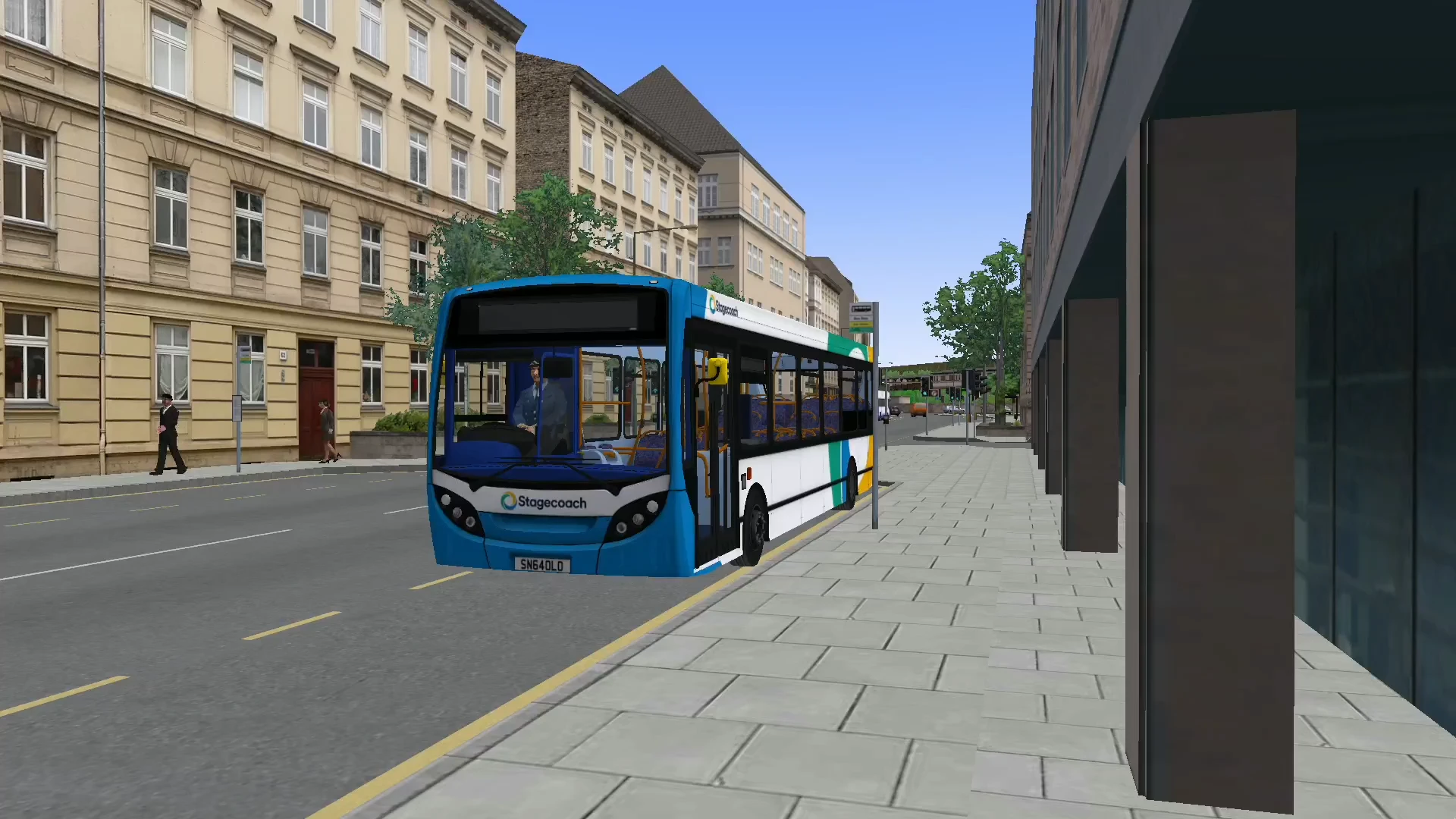
OMX in short
OMX is a new implementation of OMSI 2, the bus simulator. Rather than modifying the original program, OMX implements the simulation itself, from scratch, and reads the same content OMSI 2 does.
It has three goals:
- Compatibility with existing OMSI content, in its original formats.
- Accuracy: reproducing the behaviour of the original simulation as closely as possible.
- A modern foundation: a 64-bit application that removes limits of the original engine and keeps being developed.
How OMX relates to OMSI 2
OMX requires an installation of OMSI 2. It does not include any OMSI 2 content of its own. Instead, it runs the buses, maps and other content from your installation, including the add-ons you have installed.
That makes OMX different from a mod or a patch. A mod changes how OMSI 2 behaves from the inside. OMX is a separate program, written from scratch, that takes the place of the original engine while working with the same content.
The content OMX runs
The value of OMSI 2 today lies largely in its community content. OMX is meant to run all of it, including:
- buses, including their models, cockpits and physics configuration;
- maps and the splines and scenery placed on them;
- scenery objects, from static props to scripted, animated objects;
- scripts that drive vehicle systems and objects;
- textures and sounds;
- timetables;
- AI traffic;
- pedestrians and passengers;
- the configuration files that tie all of this together.
The default expectation is that all of it works: if something runs in OMSI 2, it should run in OMX. OMX is still in development, so there are gaps to fill, and development updates cover what is being worked on.
Why accuracy comes first
OMSI content was built and tuned by its authors against the way OMSI 2 behaves. A bus script expects certain values at certain times; a map's timetable expects traffic and passengers to behave in a particular way. An engine that behaves "better" but differently would break content in ways that are hard to notice and hard to fix.
So OMX treats the original's behaviour as the specification. Where existing content relies on how OMSI 2 works, the aim is to reproduce that behaviour as precisely as possible. Write-ups on how specific parts of the original work, and how OMX approaches them, will be published in the technical section.
A modern 64-bit application
OMSI 2 is a 32-bit application. A 32-bit process can address at most 4 GB of memory, however much is installed in the PC, and large maps and highly detailed vehicles can run into that limit.
OMX is built as a 64-bit application, so that limit does not apply: the practical ceiling becomes the memory in your system. As a new implementation, the engine can also keep being developed and adapted to modern hardware.
What OMX is not
- Not a graphical remaster. OMX runs the models and textures your content already has. It is not trying to make OMSI maps look like a new release.
- Not a mod or patch for OMSI 2.
- Not a replacement for owning OMSI 2. You need an OMSI 2 installation to use OMX.
- Not openOMSI. OMX is a separate project, unrelated to openOMSI.
Current status
OMX is in a closed beta. Testers are selected by the developer, and there is no public download. No release date has been announced; development updates are published as work progresses.